
Sliding vs hinged wardrobes: how to choose
Both work well, but they suit different rooms. Here is how sliding and hinged wardrobes compare, so you can decide what fits your bedroom.
How much space is in front of the wardrobe?
Hinged doors swing out into the room, so you need clear space in front of the wardrobe to open them fully. Sliding doors move sideways and need no swing space, which is why they are popular in compact bedrooms where the bed sits close to the wardrobe wall.
Seeing everything at once
Hinged doors open completely, so you see the whole wardrobe in one go. With sliding doors, only part of the wardrobe is open at a time, because the doors overlap. Plan the inside of a sliding wardrobe so each section can be reached when its door is open.
Looks and finishes
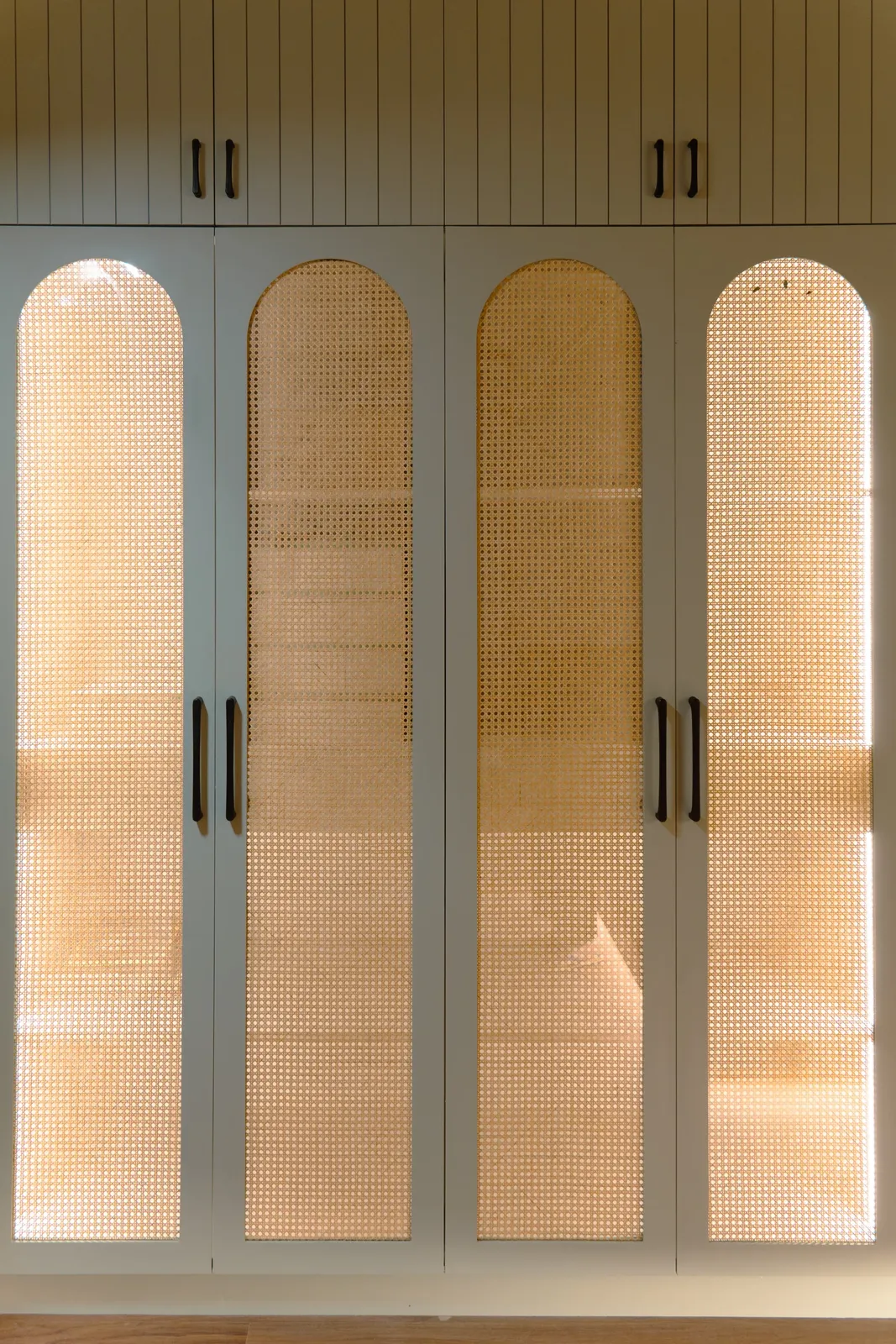
Sliding wardrobes give a clean, uninterrupted front and suit large panels such as glass, mirror, lacquered finishes or patterned laminates. Hinged wardrobes suit classic profiles, mouldings, cane, fluted panels and arched shapes, and each door can have its own handle or detail.
Hardware and care
Sliding wardrobes depend on good-quality tracks and rollers, and the tracks need to be kept clean. Hinged wardrobes rely on hinges, which are simple to adjust and replace. Either way, soft-close fittings make a noticeable difference in daily use.
Planning the inside
Whichever door you choose, the inside matters most: long and short hanging sections, shelves, drawers, a loft for rarely used items, and accessories for trousers, ties, sarees or jewellery. Add lighting inside if the wardrobe is deep or in a dark corner.
A simple rule of thumb
Choose sliding doors when space in front of the wardrobe is tight, or you want a sleek, flat front. Choose hinged doors when you have room to open them and want to see everything at once. A designer can show both options in 3D for your room.